Read “Countries are struggling with extreme weather” (page 1, What’s Up September 2022) to complete this crossword.
Type your answers into the boxes. If your word turns green, it means you got it right. If it turns red, you need to try again: you can type over the previous word you entered.
Can’t see all the clues? Just point at the Across or Down list and scroll down to read the rest of the clues.
Read “Water solutions” (page 8-9, What’s Up August 2022) to complete this crossword.
Type your answers into the boxes. If your word turns green, it means you got it right. If it turns red, you need to try again: you can type over the previous word you entered.
Can’t see all the clues? Just point at the Across or Down list and scroll down to read the rest of the clues.
Read “World Cup workers: Qatar aims to treat workers better” (pages 10-11, What’s Up July 2022) to complete this crossword.
Type your answers into the boxes. If your word turns green, it means you got it right. If it turns red, you need to try again: you can type over the previous word you entered.
Can’t see all the clues? Just point at the Across or Down list and scroll down to read the rest of the clues.
Elise Wortley wore the type of clothes that explorer Freya Stark would have worn when she travelled to Iran in 1931. Her travel companion behind her is wearing modern gear. [Photo: OLIVIA MARTIN MCGUIRE]
WINNIE LEUNG talks to Elise Wortley, who has retraced women explorers’ journeys using only what they had in those days.
Elise Wortley was 16 years old when she read the book that would plant the seed of adventure in her mind. The author was Alexandra David-Néel, a little-known French-Belgian explorer. In My Journey to Lhasa, Ms David-Néel recounted her travels through Asia from 1911 to 1924. She had trekked the Himalayas, camped in the snow, and even lived in a cave, all while using the most rudimentary equipment.
In 1924, disguised as a beggar, Ms David-Néel had made her way to the Tibetan city of Lhasa, which was then closed off to foreigners. She was the first European woman to enter Lhasa. Back then, Ms David-Néel’s expedition was no easy feat, especially for a woman travelling alone.
“Her whole story just really captured my imagination. I always had it in the back of my mind to follow in her footsteps in some way,” Ms Wortley said in a BBC interview.
That chance came in 2017, more than a decade after Ms Wortley first read My Journey to Lhasa. She decided to leave her home in South London to recreate the first part of Ms David-Néel’s epic journey in Sikkim. Sikkim is a north-eastern state in India. This meant trekking 750 kilometres from the small town of Lachen to Mount Kanchenjunga along the Tibetan border and climbing at altitudes of up to 5,050 metres. Mount Kanchenjunga is the world’s third highest mountain.
Doing it her way
Ms Wortley did not just follow Ms David-Néel’s route. She was also determined to forgo modern equipment. She used only the things that Ms David-Néel had in the 1920s. She fashioned a climber’s backpack out of a discarded wooden chair and a large basket tied together with rope, slept under a canvas tent, used a thick yak wool coat, and even wore 1920s underwear!
Besides shining a spotlight on Ms David-Néel’s extraordinary achievements, Ms Wortley wanted to inspire women to get out of their comfort zones and to go on to be the next generation of adventurers.
Alexandra David-Néel in Tibet in 1924, and a recent edition of the book she published in 1927. She sparked Elise Wortley’s passion for travel.
Recreating more adventures
After returning home from India, Ms Wortley read up on other women explorers of the past. She discovered dozens of intrepid women whose adventures excited her. These included Scottish writer Nan Shepherd and Zora Neale Hurston, an American author, anthropologist, and filmmaker. Ms Wortley knew she wanted to follow in their footsteps too. Thus, her travel project, which she named “Woman With Altitude”, continues.
Fast forward to May 2022. Ms Wortley is now 32. She has just returned from her latest Woman With Altitude expedition, retracing the footsteps of British-Italian explorer Freya Stark. In the 1930s, Ms Stark ventured into parts of the Middle East that few Western explorers had been to before. Some of her earliest travels included trekking through the wilderness of western Iran to the fabled Valley of the Assassins. Ms Stark was one of the first non-Arabs to explore the Arabian Desert in modern times.
Ms Wortley tells What’s Up more about the woman she has nicknamed “the female Indiana Jones”, and what it was like recreating Ms Stark’s journey to the Valley of the Assassins.
Freya Stark, seen here in Arab dress, is another woman explorer whom Elise Wortley admires.
What’s Up (WU): When did you decide to go to Iran and how long did it take to prepare for this trip?
Elise Wortley (EW): I originally started planning this trip for May 2020, but obviously the pandemic meant I could not travel there until May 2022! When I finally knew I could go, it took about four months to prepare for the actual trip, from putting a team together and sorting out visas to plotting our route and packing for the journey.
One of the items I discovered Freya took with her on her famous journey was a Burberry coat, so I spent months searching the internet for one from the 1930s to wear on my own trip. I had nearly given up before a friend of mine put me in touch with a vintage shop owner. It just so happened he had this women’s 1930s Burberry coat with a matching hat — the only one I had ever come across, and even luckier as he only really dealt in menswear!
WU: Tell us more about the itinerary.
EW: We followed her path as she described in her book The Valleys of the Assassins and Other Persian Travels. Amazingly, her maps of the area were quite accurate, so it didn’t take too long to work out her actual path. The book has quite a bit in it about different parts of Iran, but we followed the exact route she does in the chapter called “The Valleys of the Assassins”.
Elise Wortley with a mule that helped her carry her bags on her trip. She named the mule after Freya Stark. She said, “The man who owned her said he had never given her a name…so there was only one name it could be. And she was such a kind, gentle animal — think she made the trip!” [Photo: OLIVIA MARTIN MCGUIRE]
WU: What were some highlights and challenges of your trip?
EW: The highlight was definitely the people we met along the way. Iran is famous for its hospitality and the people we met were so warm and welcoming. We were staying with families along the route and there was always such delicious food and a warm welcome waiting for us at the end each day.
The challenge is always doing these trips using old equipment. The boots this time were a real struggle! It’s always quite difficult being around people who are in modern clothes, especially at the end of the day when all you want to do is put a fresh clean jumper on to sleep in, but you can’t. Freya only had the one outfit with her, so I had to do the same.
But, another challenge with Iran was the worry and opinions you get before you travel there. We only get very negative news about Iran in the UK, so you hear a lot of things and people warning you not to go — but actually, it’s a very misunderstood place. Oh, and the scenery was completely incredible!
Meeting local people was the highlight of Ms Wortley’s adventure in Iran. Here, she is pictured with some Iranian friends at a homestay. [Photo: OLIVIA MARTIN MCGUIRE]
WU: What was the most surprising thing you learnt about Freya?
EW: It’s interesting as Freya doesn’t ever talk about how she really feels in the book. Since women writers at the time struggled to be taken seriously, they would never write too much about if they were afraid or lonely or how they were really feeling deep down. It amazed me just how remote this area is and how it would have been even more cut off during Freya’s time. It really struck me how brave she must have been to go all this way on her own, and how lonely her journey would have been. I was with a group of other women, and I was so glad to have them around me, to help me when things got tough and to share the incredible experience with.
WU: Finally, what’s next for you?
EW: My dream is to follow Irish pirate Grace O’Malley’s 16th-century voyage from the west of Ireland to England. It would involve a group of women rowing from west Ireland over to London and up the River Thames to Greenwich. I’ve been looking into it for years, but unfortunately it will be a very expensive trip, so I’m waiting until I can get the proper funding for that one.
In the meantime, I’m heading to Scotland in a few months to recreate the first all-female climb of Ben Nevis by the Ladies’ Scottish Climbing Club. The club was set up in 1908 by Scottish mountaineer Jane Inglis Clark, who wasn’t allowed in the men’s club. There are very famous photos of the women climbing in old ropes and petticoats, so I’m looking forward to dressing the part!
“News from everywhere” (pages 2-3, What’s Up June 2022) gives us some highlights of what is happening in various parts of the world. Read the two pages and complete this crossword.
Type your answers into the boxes. If your word turns green, it means you got it right. If it turns red, you need to try again: you can type over the previous word you entered.
Can’t see all the clues? Just point at the Across or Down list and scroll down to read the rest of the clues.
Read “A family road trip that lasted 22 years” (page 15, What’s Up May 2022) to complete this crossword.
Type your answers into the boxes. If your word turns green, it means you got it right. If it turns red, you need to try again: you can type over the previous word you entered.
Can’t see all the clues? Just point at the Across or Down list and scroll down to read the rest of the clues.
Read “Lost ship discovered in icy Antarctic waters” (page 8, What’s Up, April 2022) to complete this crossword.
Type your answers into the boxes. If your word turns green, it means you got it right. If it turns red, you need to try again: you can type over the previous word you entered.
Can’t see all the clues? Just point at the Across or Down list and scroll down to read the rest of the clues.
“Bringing entertainment to the streets” (page 22, What’s Up March 2022) is a glimpse into the world of local buskers. Read the story and complete this crossword.
Type your answers into the boxes. If your word turns green, it means you got it right. If it turns red, you need to try again: you can type over the previous word you entered.
Can’t see all the clues? Just point at the Across or Down list and scroll down to read the rest of the clues.
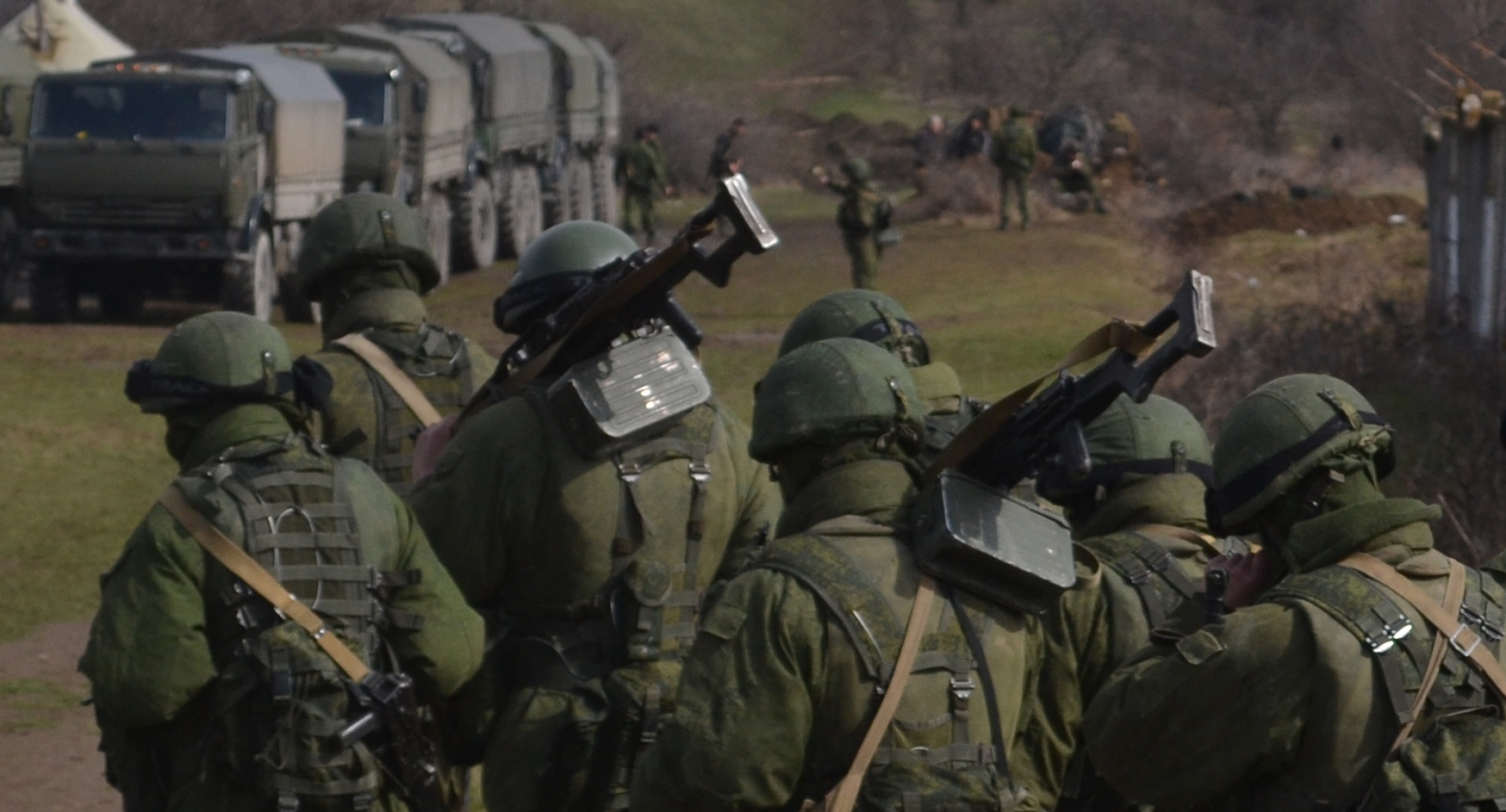
Russia took over a part of Ukraine called Crimea in 2014. It has now launched a much bigger invasion.
What you should know about the news everyone is talking about
The biggest news in the world right now is Russia’s military invasion of Ukraine. People are shocked that Russia’s leader has chosen to go to war against a neighbour. The war is worrying because it will cause unnecessary suffering.
Why did Russia do it?
Russia’s President is a man named Vladimir Putin. When Mr Putin was younger, his country was much larger and more powerful. It was called the Soviet Union and it contained not only Russia but also many other smaller nations, including what is now Ukraine.
The Soviet Union was a communist country that wasted a lot of money building up its military power while its citizens remained poor. The country collapsed in 1991 and broke up into different independent states. This brought freedom and economic progress to the people of the former Soviet Union.
Mr Putin, however, felt that the break-up of the Soviet Union was a tragedy. He believes that Russia should still control what goes on in neighbouring countries that the Soviet Union once ruled. He even dreams of the 19th century Russian Empire, which was the world’s third largest empire in history.
Mr Putin was angry that Ukraine did not want to accept Russia’s leadership. Instead, Ukraine became friendly with its western neighbours in Europe, and Russia’s big rival, the United States. Ukraine was thinking of joining a US-led defence club called NATO. This was too much for Mr Putin to tolerate. On 24 February, he ordered his huge military to invade.
Some Russians are against the war. But Russia is not a democracy. Mr Putin’s government punishes severely citizens who oppose his wishes. So peace-loving Russians could not stop their President’s dangerous plan.
Russian President Vladimir Putin and Ukraine President Volodymyr Zelensky.
How are Ukrainians responding?
Ukraine is quite a large country. It is around the size of Myanmar or Thailand, and has a population of 44 million, which is more than Canada. But it is much smaller and weaker than Russia. There was no way Ukrainians could stop the Russian army from invading, or stop its missiles from hitting Ukrainian cities.
Many Ukrainian families are fleeing to safety in the West. Poland and other neighbouring countries are receiving many refugees from Ukraine. Ukraine’s President Volodymyr Zelensky has vowed to stay and fight for his country’s freedom. The Ukrainian army and even many ordinary citizens are trying to resist the Russian invaders. They are showing inspiring courage and patriotism.
How are other countries helping?
The United States and its European partners in NATO have even more powerful military forces than Russia. Some of these countries are sending weapons to help the Ukraine military. But it would be extremely dangerous for NATO to go to war against Russia in order to liberate Ukraine. Such a war between military giants would be disastrous. The last major war in Europe, from 1939 to 1945, became what is now called “World War 2”. Nobody wants “World War 3”.
The main way other countries are punishing Russia is with economic “sanctions”. These are penalties that will make it more difficult or more expensive for Russia to do business with the rest of the world. Like all modern countries, Russia needs to import and export things. To trade things with other countries, it needs money to flow easily between Russian banks and foreign banks. Many Russian companies and businessmen operate in other countries. Sanctions by the US and other countries will block many of these activities. They hope that these punishments will be so costly for Russia that Mr Putin will change his behaviour. Ukrainians and the rest of the world want him to settle his differences with Ukraine peacefully.
Like these Americans, people in many countries are showing their support for Ukraine.
WHAT IS ‘NEWS’?
You do not have to feel anxious that wars like this are suddenly going to erupt all over the world. Almost all countries, including in our part of the world, live in peace with their neighbours. Russia’s behaviour is such big news because it is so unusual, not because it is common.
“News” focuses on things that are unusual. Things that are ordinary — like countries having friendly relations with one another — do not make big news on television, newspapers, or the internet. Even a dangerous disease like dengue stops entering the “news” every day when it becomes very common. War is much rarer, which is why the Russian invasion fills the news right now.